

Iran's priority is not rapid victory, but maintaining sovereignty, increasing costs for the adversary, and securing long-term regional influence – goals achieved through its highly successful asymmetric strategy
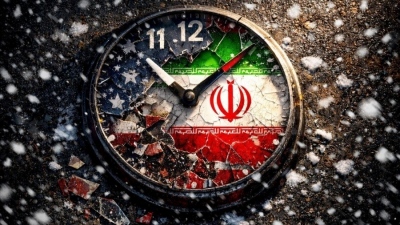
The Middle East region is experiencing an unprecedented strategic shift. This is a situation without parallel, as the military machine of the US and Israel is being vociferously demystified. Following coordinated attacks by the US and Israel that led to the assassination of Iran's Supreme Leader Ayatollah Ali Khamenei and several senior officials, the country—under his successor Mojtaba Khamenei—now appears to have seized the full initiative in the war. This represents a unique phenomenon in the history of conflicts involving superpowers like the US and Israel.
In his first statement after assuming leadership, Mojtaba Khamenei emphasized the need for national unity and stressed that the vital global corridor of the Strait of Hormuz will remain closed, exerting pressure on Iran's enemies. At the same time, he called for the closure of all American bases in the region or direct attacks upon them, noting that the Islamic Republic will continue to defend its national sovereignty. Mojtaba Khamenei highlighted the importance of Tehran's alliances with organizations and armed groups across the broader region, such as the resistance in Yemen and militias in Iraq, which "seek to aid the Islamic Revolution." Simultaneously, he thanked the Iranian military for the determination it displayed, preventing the country from being dominated or divided during the initial US and Israeli strikes. How, then, did Iran manage to seize the initiative in this military confrontation?
The traumatic ordeal uniting Iran
Alongside Iran's strategic and tactical successes, serious information regarding the health of the new Supreme Leader Mojtaba Khamenei has caused concern in Tehran. According to a report by the British newspaper The Sun, the 56-year-old is allegedly in a coma following a US airstrike, having suffered severe injuries that may include amputation and damage to vital organs; he is reportedly hospitalized in critical condition in an intensive care unit at Sina University Hospital in Tehran. Despite the criticality of his condition and limited data due to an internet blackout, Iranian state television broadcast the message attributed to Khamenei, which emphasizes Iran's commitment to avenge the blood of the fallen and relentlessly continue military operations.
State media refer to the new leader as the "Jaanbaz of Ramadan," a title bestowed upon severely wounded war veterans that underscores his sacrifice and indomitable resolve. This injury, rather than causing fear or uncertainty, appears to have bolstered Iranian morale and strengthened the country's unity. Military operations continue with intensity, with the IRGC effectively taking command and ensuring that the Islamic Republic remains active and decisive on all fronts. The image of a leader suffering injury yet remaining a symbol of endurance and resistance has been transformed into a powerful psychological weapon, highlighting that the Iranians do not intend to retreat.
Iran's highly successful asymmetric strategy
From a strategic perspective, Tehran has already shown evidence of the effectiveness of a new approach via asymmetric strategy. As John Phillips, a British security consultant and former military instructor, explains, asymmetric strategy involves the use of guerrilla warfare, unconventional attacks, cyber warfare, and support from proxy allies to offset conventional inequality with stronger adversaries like the US and Israel. The use of asymmetric strategy is not merely a reactive tool for Iran, but a central pillar of its strategy for survival and pressuring the opponent.
In recent years, Tehran has chosen not to attempt direct competition with the ultra-expensive weaponry of the US or Israel, but rather to build a "proactive deterrence" in gray zones between war and peace. This involves using ballistic and cruise missiles, mass production of drones, cyber-operations, and underground bunkers that complicate any preemptive strike.
Iran's tactics and pressure on the US and Israel
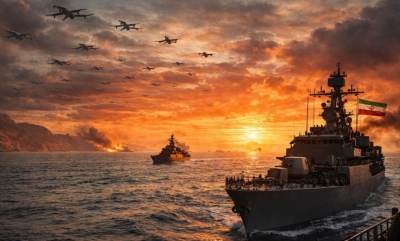
Since the start of the US and Israeli attacks on February 28, 2026, Tehran has unleashed a wave of ballistic missiles against Israeli and American bases in the Persian Gulf region, utilizing drones and short-to-medium-range missiles to deplete the missile defense stockpiles of its adversaries. This strategy, known as the "tactic of enemy exhaustion," has already increased the operational costs for the US and Israel.
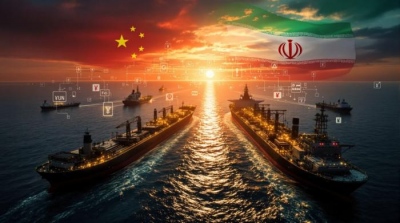
Simultaneously, Tehran has leveraged economic weapons, closing the Strait of Hormuz, through which approximately 20% of global oil and gas production passes. The attack on tankers and vital infrastructure, such as airports and desalination plants, has created intense volatility in energy markets, with the price of Brent exceeding $100 per barrel as fluctuations continue. In the economic field, Iran has threatened financial centers and banks linked to the US and Israel in the Gulf region, while major multinational technology corporations like Google, Microsoft, IBM, Nvidia, and Oracle, which possess infrastructure in Israeli cities and Gulf countries, found themselves under threat. The risks to the stability of financial markets are now real, as many international bank branches in the region have closed.
Pressure in the Persian Gulf – The US made a major mistake
Tehran correctly calculated that attacks on infrastructure and the suspension of air traffic would frighten investors and tourists—vital sources of income for many Persian Gulf states. The threat to civilian lives, particularly in cities near bases like Bahrain, intensified pressure on regimes to demand that the United States limit the war or withdraw. Furthermore, the excessive strengthening of Israel causes resentment among Arabs and has fueled unrest in Gaza and the West Bank, with the "Arab street" watching developments with fury.
In other words, Iran's strategy was to make the cost of the American presence in the Gulf "unacceptable" for allied countries, creating a combination of economic, political, and social pressure that could constrain American escalation. Meanwhile, attacks on Israel focused on Ashkelon, Jerusalem, Tel Aviv, and Haifa. The greatest failure of the American strategy is not military, but political. For more than twenty years, much of the political discourse in Washington was based on the assumption that the Iranian regime is fragile and that sufficient external pressure—sanctions, military strikes, or covert operations—could eventually lead to regime change. However, a recent assessment by the US National Security Council reached a completely different conclusion: even a large-scale military campaign is unlikely to lead to a collapse of the regime. This analysis highlights something that American planning seems to have ignored: Iran's political system possesses institutional mechanisms that allow for political continuity even in times of crisis.
The great significance of allied organizations
A central element of Iran's strategy is its network of allies, such as Hezbollah in Lebanon, Shiite militias in Iraq, organizations in Syria, Hamas and Palestinian Islamic Jihad in Gaza, and the Houthis in Yemen. These organizations receive weapons, training, and funding from Iran, allowing Tehran to threaten multiple fronts simultaneously at relatively low cost and with some degree of ambiguity for itself.
Iran has organized a "mosaic" defense system, with a multi-layered and semi-autonomous command structure rather than a centralized one, to reduce vulnerability to attacks aimed at "decapitating its leadership" and to maintain retaliatory capability. This structure, largely under the guidance of former Revolutionary Guard (IRGC) commander Mohammad Ali Jafari, allows Tehran to frustrate the adversary and prolong the time of engagement on the battlefield.
Economic and military costs for the US and Israel
Iran's tactics have already created significant problems for its opponents. The cost of replacing Tomahawk missiles and missile defense systems like Patriot and THAAD has become enormous. According to the Center for Strategic and International Studies (CSIS), the first 100 hours of Operation "Epic Fury" cost the US approximately $3.7 billion. Analysts estimate that one day of conflict costs the US about $1-2 billion, while Israel, already burdened by previous conflicts, faces intense social pressures.
Even the political results are evident. In the US, Hakeem Jeffries, the House Minority Leader, accused Donald Trump of "pointlessly wasting billions on an endless war in the Middle East" at the expense of citizens. In Israel, politician Yair Golan criticized the Netanyahu government for a lack of preparation and an economic plan to support citizens during the war.
Effectiveness of Iran's tactics
Iran's strategy appears to have paid off to a significant degree. The country has shown the ability to jeopardize the global economy and increase the political cost for the US and Israel. At the same time, the use of drones and limited missile attacks allows Tehran to remain in control of the situation, increasing the cost of potential regime change and keeping the military and political initiative in its hands.
This strategy essentially constitutes a war of endurance, where Iran seeks to prolong the conflict, create economic and military pressure on its adversaries, and exploit the fatigue and political pressures they face. The priority is not rapid victory, but maintaining sovereignty, increasing costs for the opponent, and ensuring long-term influence in the region.
A historic turning point
The current situation represents a historic turning point: for the first time, Iran has fully seized the initiative in a war with superpowers like the US and Israel. Through asymmetric strategy, the use of allied organizations, economic pressure, and crisis management on multiple fronts, Tehran has managed to turn apparent power inequality into an advantage, imposing new realities on the region and highlighting a new form of conflict in the 21st century. Iran's ability to define the terms of the conflict is proof that its strategy is now at the heart of regional dynamics and that the US and Israel are being called to react under suffocating pressure—military, economic, and political.
www.bankingnews.gr





Σχόλια αναγνωστών